The short answer
HVAC maintenance is a hands-on inspection and cleaning of your AC, furnace, or heat pump that catches worn parts before they fail. In Los Angeles, schedule cooling service in spring and heating service in fall. Book sooner if you notice uneven temperatures, new noises, or higher bills.
Most heating and cooling breakdowns in Los Angeles don't come out of nowhere. A clogged filter, a weak capacitor, or a dirty condenser coil can quietly strain a system for months before it quits on the hottest afternoon of the year. Regular maintenance catches those problems while they're still small. AirEdge HVAC Repair Service does maintenance visits on central air conditioners, gas furnaces, and heat pumps for homeowners in Los Angeles and nearby cities. This page covers what a visit includes, the signs maintenance is overdue, and what happens if we find something that needs more than a tune-up.
Signs Your System Needs Maintenance
Los Angeles weather is easy on people but uneven on equipment. Inland neighborhoods and the valleys run much hotter in summer than areas near the coast, so air conditioners there can run long hours for months. Fall Santa Ana winds bring hot, dry spells and blow dust into outdoor units. Winters are mild, so a furnace may sit unused most of the year and then be asked to work on the first cold night.
A good rule is cooling maintenance in spring and heating maintenance in fall. If you can't remember the last visit, or you notice any of the following, it's time to schedule one:
- Rooms that don't cool or heat as evenly as they used to
- Longer run times, or the system turning on and off in short bursts
- Higher electric or gas bills without a change in how you use the system
- New noises such as rattling, buzzing, squealing, or banging at startup
- A musty, dusty, or burning smell when the system turns on
- Water around the indoor unit or ice on the refrigerant lines
- More dust in the house than usual, or allergy symptoms that get worse indoors
What We Check During a Maintenance Visit
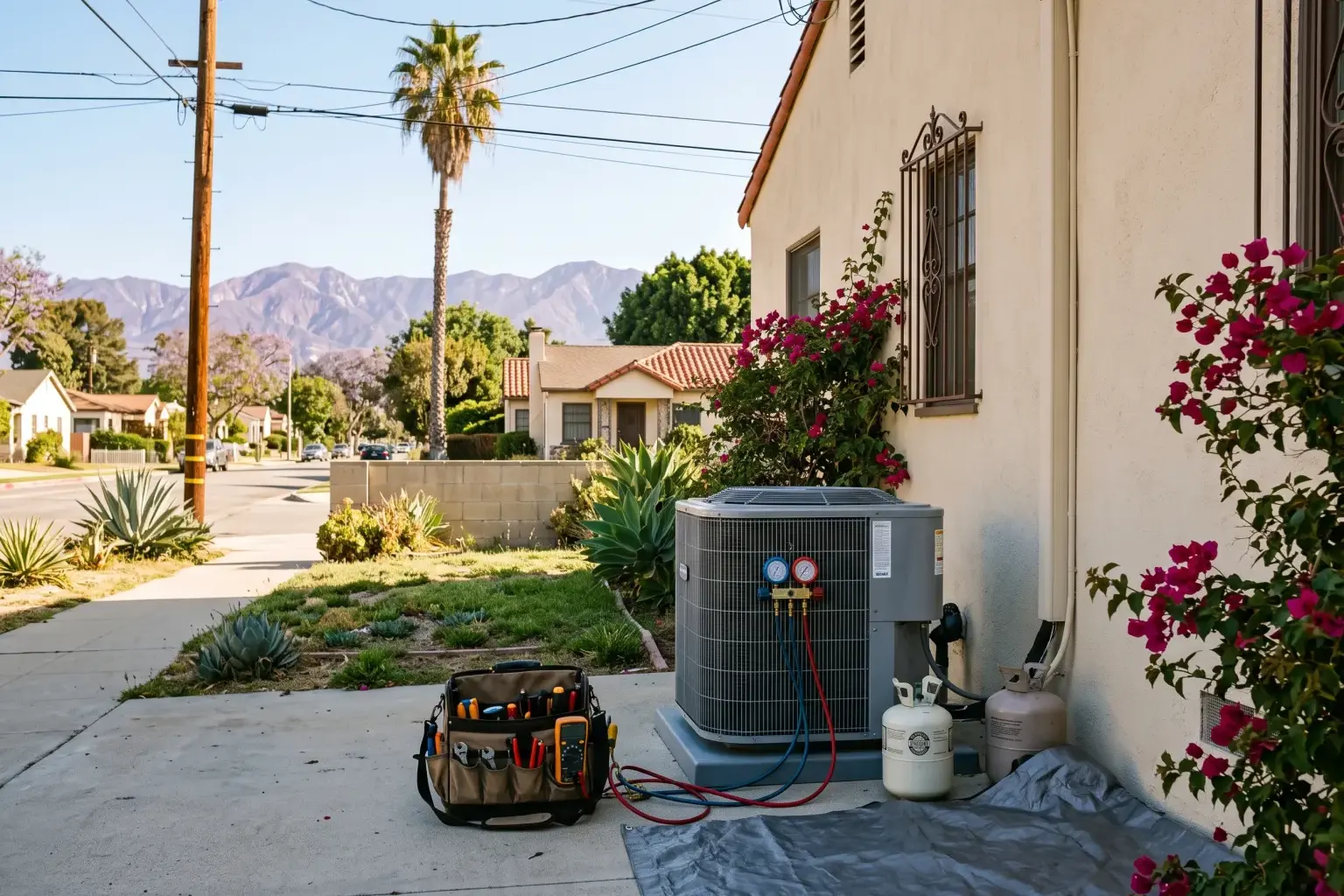
A maintenance visit is a hands-on inspection and cleaning, not a quick glance. The exact checklist depends on your equipment, but a typical visit includes:
At the end, you get a written summary of what we found, what we cleaned or adjusted, and anything we recommend watching or fixing.
- Air filter: check its condition and size, and replace it if you have one on hand or ask us to bring one
- Thermostat: confirm it reads temperature correctly and calls for heating and cooling as it should
- Electrical: tighten connections, test capacitors and contactors, and look for burned or corroded wiring
- Outdoor unit: clean the condenser coil, clear debris, and straighten bent fins where practical
- Refrigerant circuit: check operating pressures and temperatures and look for signs of leaks
- Indoor coil and drain: inspect the evaporator coil, flush the condensate line, and check the drain pan
- Blower: inspect the wheel and motor and check airflow
- Furnace: inspect burners, flame, ignition, and flame sensor, look for visible cracks or rust on the heat exchanger, and confirm the venting is clear
- Heat pump: test the reversing valve and defrost operation
- Safety controls: confirm limit switches and shutoffs work
When Maintenance Finds a Problem: Repair or Replace
Most maintenance visits end with a system that simply runs cleaner and more efficiently. Sometimes we find a part that's worn or failing. When that happens, we explain the problem, show you what we saw, and lay out your options before doing any extra work.
Repair usually makes sense when the system is in reasonable shape overall and the problem is a single part, like a capacitor, igniter, motor, or clogged drain. Replacement is worth discussing when a system needs major repairs again and again, uses an older refrigerant that's harder to service, has a cracked heat exchanger, or can no longer keep the house comfortable.
If you're considering a new gas furnace, South Coast AQMD Rule 1111 limits NOx emissions from natural-gas furnaces sold and installed in the region, and the district has been amending it toward zero-emission requirements. The district sets and revises the compliance dates, so check the current rule before planning a replacement. We'll walk through how it affects the equipment you're considering.
Heat pumps handle both heating and cooling and are a common replacement option. LADWP residential electric customers can apply for rebates on qualifying heat pump systems, with the amount based on the unit's efficiency ratings. The application is filed after the system is purchased and installed, within 12 months of purchase. Many homes outside the City of Los Angeles are served by Southern California Edison instead, so available rebates depend on your utility, and we confirm the current offer before quoting it. The federal 25C tax credit covered heat pumps placed in service before December 31, 2025, and is not available for new installations now.
What Affects the Cost of Maintenance
We don't quote a flat number sight unseen, because several things change how long a visit takes and what it involves:
We give you the maintenance price before we start, and we price any repairs separately so you can decide on them.
- How many systems you have, and whether you need cooling, heating, or both checked
- The type of equipment: split air conditioner with furnace, heat pump, or packaged unit
- Access: attic installs, tight closets, and rooftop units take longer
- How long it's been since the last service, and how dirty the coils and drains are
- Whether parts, filters, or refrigerant are needed
- Whether you want a one-time visit or a recurring maintenance schedule
How a Maintenance Visit Works
Booking is simple. Tell us what equipment you have, if you know, and anything you've noticed, like a new noise or a room that stays warm. We'll set a time that works for you.
When the technician arrives, they'll ask a few questions, then check the thermostat and run the system to see and hear how it behaves. Next comes the inspection and cleaning, indoors and out. Plan on someone being home for the visit, with clear access to the indoor unit, the outdoor unit, and the electrical panel.
Before leaving, the technician goes over the findings with you, answers your questions, and leaves a written summary. If a repair is needed, you'll get the options and the price first. Nothing extra gets done without your OK.